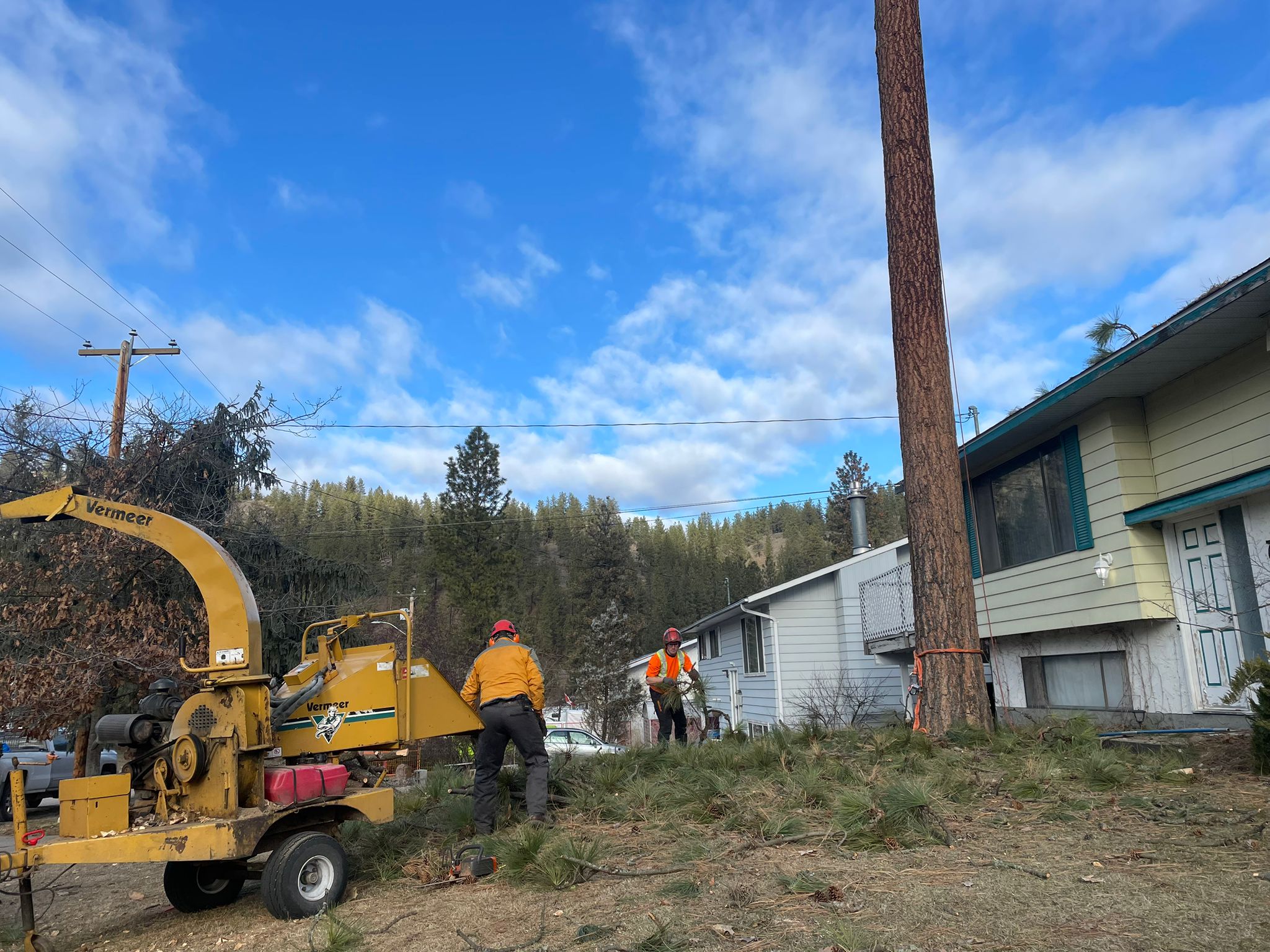
There's a tree at your place. You know the one.
You can see it from the kitchen window. It leans a little — over the driveway where the truck parks, or toward the corner of the roof, or over the spot where the kids get out of the car. You're almost sure it leans a little more than it did a few years ago. When the wind picks up at night, you catch yourself listening. And at some point, standing at that window with a coffee, you've said the words out loud: "I should really do something about that tree."
Then you didn't. Not because you're careless — because you're normal. This post is about that tree, and about the gap between knowing and doing that a windstorm eventually closes for you.
Every yard has one, and every owner has a reason
A good share of the removals we do start with some version of "we've been meaning to call for a couple of years." Nobody's embarrassed to say it, and nobody should be, because the reasons for waiting all sound sensible from the kitchen window:
- "It's stood there for forty years." True — and for most of those forty years it was smaller, healthier, and carrying less weight over your stuff. Every tree that has ever come down had a perfect record right up until it didn't.
- "It's probably fine." Maybe! Genuinely — some leaning trees are fine, and we'll get to which ones. But "probably fine" is an assessment you're making from the ground, through a window, with no particular urge to hear a different answer.
- "Getting a quote feels like committing." It isn't. A quote is information. But a phone call makes the problem real, so the call keeps not happening.
- "It might sort itself out." This is the quiet hope underneath the other three, and it's the one the tree can't deliver on. Trees have exactly one way of resolving a lean on their own, and you're parked under it.
None of this is a character flaw. It's just how people handle a slow-moving problem with no deadline. The trouble is that the deadline exists — you just don't get to see it on the calendar.
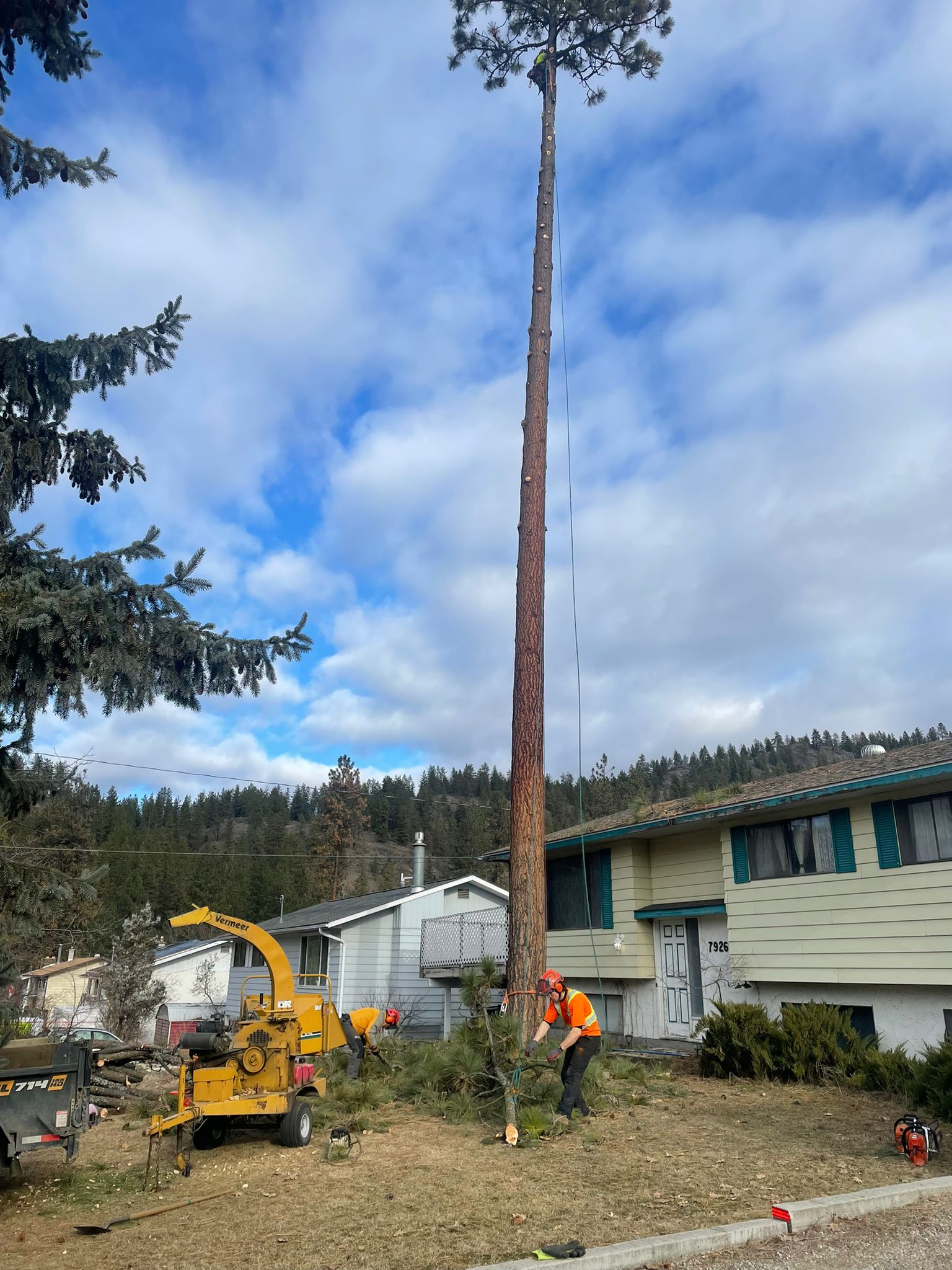
Which leaning trees are actually a problem
Not every lean is a crisis, and it helps to know the difference between the two kinds.
A tree that has always leaned often grew that way — chasing light, shaped by wind — and compensated as it grew. You'll usually see the trunk curve back toward vertical as it rises, and the wood on the loaded side has been building strength for decades. These trees still deserve a look if there's a target under them, but the lean itself isn't an alarm bell.
A tree that has started leaning — or leans more than it used to — is a different animal entirely. A changing lean means something is moving at the root plate, and the things to look for are on the ground, not in the crown: soil mounding or cracking on the side away from the lean, roots lifting, a gap opening at the base of the trunk. That is not a "get a quote sometime this fall" situation. That's a phone call today, and we'd rather you make it at 2 p.m. than need the emergency line at 2 a.m.
Between those two extremes sits everything else you might spot from the driveway: dead limbs parked over where you park, a top that died in a dry year, a crack you noticed after the last storm, two trunks squeezed together in a tight V. We keep a fuller checklist in 5 warning signs your tree needs to come down — and after the last few dry summers, it's worth re-reading with drought stress in mind, because heat-weakened trees are exactly the ones that turn a lean into a landing.
One more thing the professionals weigh that homeowners often don't: the target matters as much as the tree. A sketchy fir out in the back forty can be left to be a woodpecker hotel. The same fir hanging over the driveway, the vehicles, the propane tank, or the bedroom end of the house gets held to a completely different standard — because the question isn't just "will it fail?" but "what does it hit when it does?"
What "too late" actually costs
Here's the arithmetic that makes waiting the expensive choice. The tree is coming down either way — the only open question is whether it comes down on a schedule or on your truck.
Done proactively, it's one line on a quote: a crew, a planned day, the wood stacked where you want it. Done reactively, the removal is still on the bill — now at emergency callout rates, possibly in the dark, in the snow — and it brought friends: the body shop or the roofer, your insurance deductible, the premium bump that follows a claim, and a tarp on the house in February while you wait for trades. We ran through that math in why waiting too long can cost you thousands, and it has not gotten cheaper since. It's also worth knowing that insurance adjusters ask pointed questions when the tree that hit the house had been visibly dead or failing for a couple of years. "We knew about it" is not a sentence you want in a claim file.
And there's a cost nobody invoices: you've been paying it every windy night, standing at the window. Call it rent on a problem you don't own yet.
Proactive is cheaper because proactive has options
The best-kept secret about dealing with a problem tree early is that "deal with it" often doesn't mean "remove it."
Catch it early and the menu is long: take off the one dead limb hanging over the parking spot; prune at the right time of year to reduce weight and wind load on the worrying side; take the tree down on your schedule and your budget, in a month that suits you; or hear a professional say "this one's actually fine" and get your windy nights back. Wait for the storm, and the menu shrinks to exactly one item, at the worst possible price, on a date you don't get to pick.
That's the whole case for proactive maintenance in one sentence: early, you choose from options — late, the tree chooses for you.
The first step is embarrassingly small
You don't have to decide anything today. You don't have to commit to a removal, pick a week, or figure out a budget. The entire first step is: have us come look at it. The quote is free, and the assessment comes with it — we'll tell you straight whether the tree you've been losing sleep over is a real hazard, a minor pruning job, or a perfectly healthy tree with a dramatic posture. Some of the best visits we do end with "leave it alone, it's fine."
But do the step. The tree isn't going to make the call, and it isn't going to pick a convenient moment. Get a free quote, or phone us at 778-828-3456, and by this time next week "I should really do something about that tree" can finally become "remember that tree?"
You can stop listening to the wind.