
Nobody calls a tree service when they're happy about it. By the time you're looking up our number, a tree you've lived with — maybe one that was here before you were — has started dropping limbs on the lawn, leaning a little more each winter, or showing the warning signs of a tree in trouble. And removing it, it turns out, is not just a job. It's a process.
After enough years of doing this around the Boundary, we've noticed that homeowners tend to move through the same five stages on the way to a cleared yard. With apologies to Elisabeth Kübler-Ross, here they are.
Stage one: Denial
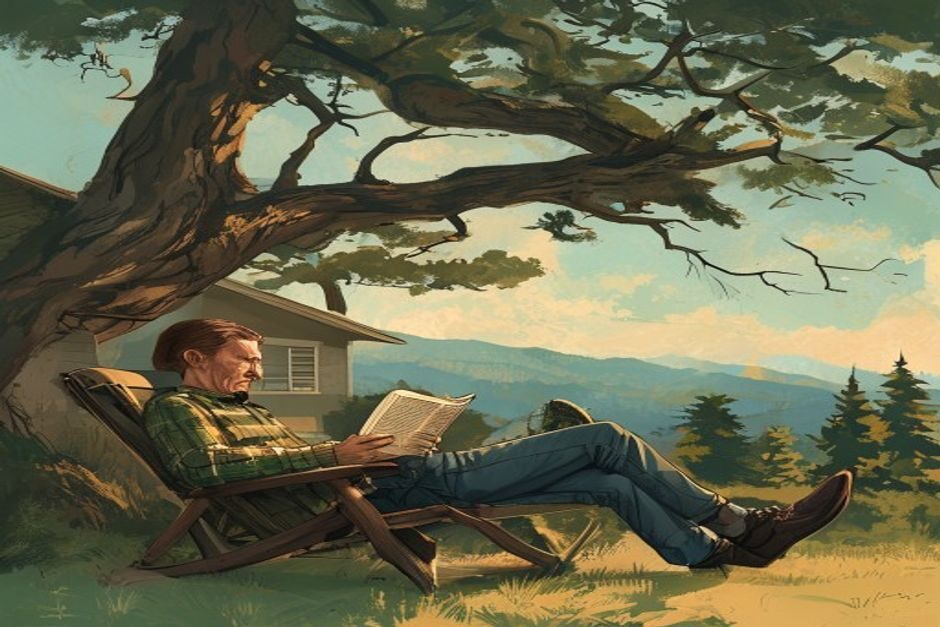
"It's been leaning like that for years." We hear this a lot, usually delivered from a lawn chair positioned directly beneath the lean. The dead branches are "just how it grows." The crack at the base is "character." The mushrooms at the root flare are, hopefully, "probably nothing."
Denial is comfortable. The tree has always been there, it still looks roughly tree-shaped, and the alternative is a Saturday and a cheque. We get it. But a tree doesn't lean more without a reason, and the reasons — root rot, a failing union, saturated soil — don't reverse on their own. Reading a book in the shade of a hazard doesn't make it less of a hazard. It just makes it a more pleasant place to be wrong.
Stage two: Anger
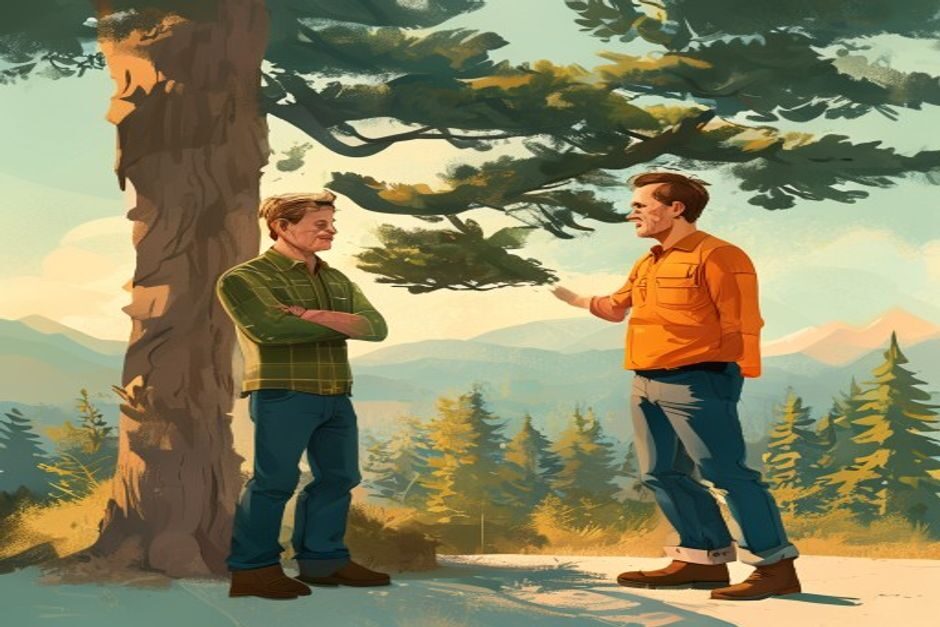
This stage is usually aimed at us. We show up, we take a look, we say the thing nobody wants to hear, and suddenly we're the villains. "You people just want to cut down a healthy tree." "My grandfather planted that." "You don't understand — this is a good tree."
Here's the truth: we like the tree too. We're not in this line of work because we hate trees, quite the opposite. But part of the job is being the person willing to say what the tree is actually doing, even when you'd rather we didn't. Be as mad as you need to be. We've been yelled at by plenty of people who shook our hand a month later.
Stage three: Bargaining
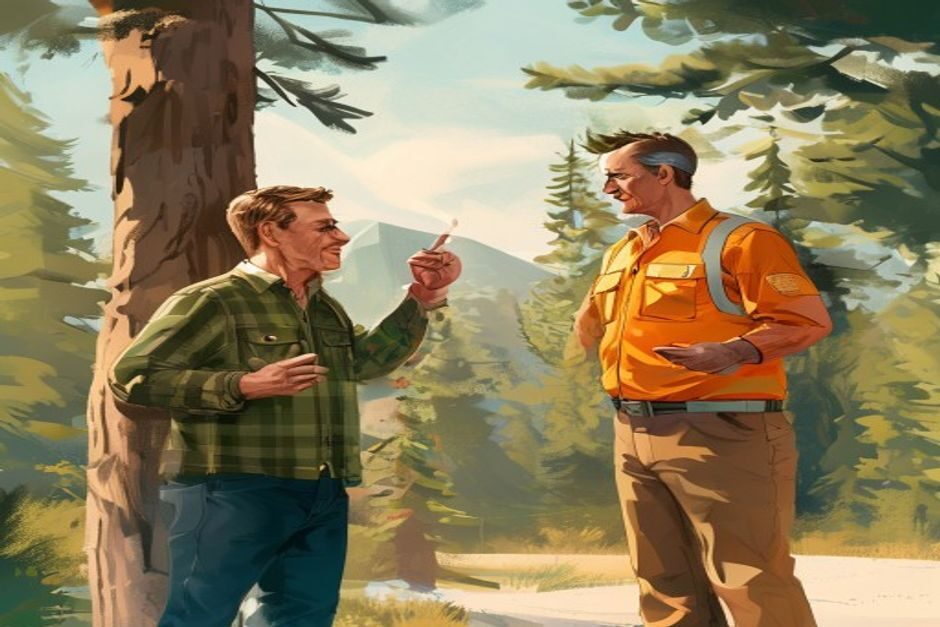
Now the negotiations begin. "What if we just take the one side off?" "What if we cable it?" "What if we wait one more year and see how it does?"
Sometimes these are real options, and when they are, we'll tell you — a good arborist would always rather prune than remove. But you can't half-remove a tree that's failing at the base, any more than you can keep half of a rotten ladder. Cabling buys time for a structurally sound tree with one weak union; it doesn't resurrect one that's dying. "One more year" is a gamble where the downside is your roof. We'll lay out what's genuinely possible — and we'll also tell you when bargaining is just denial wearing a hard hat.
Stage four: Depression
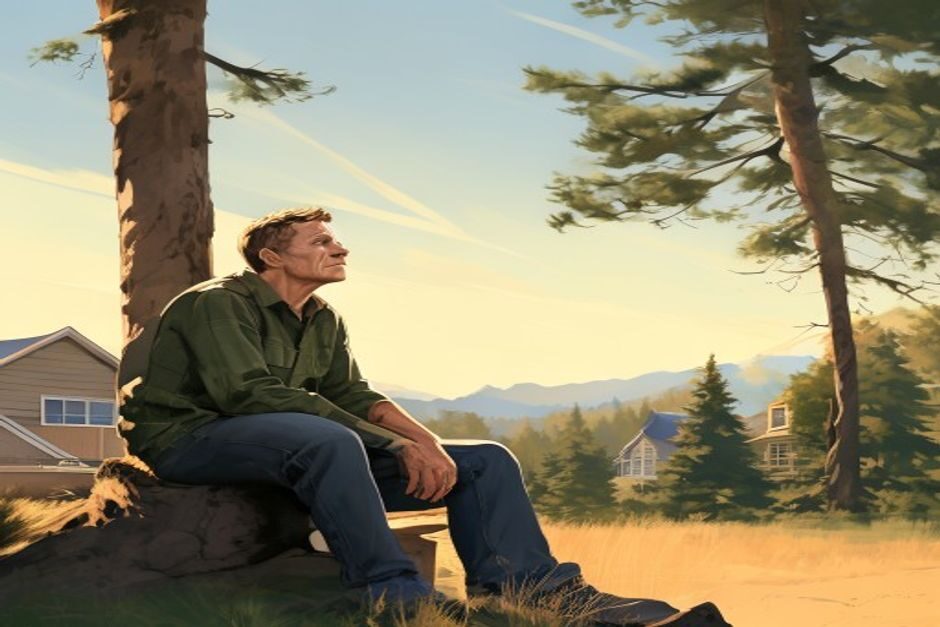
Then it's done, and the yard looks wrong. There's a stump where decades of tree used to be. The sky is suddenly, alarmingly large. The kitchen gets a strange new light in the afternoon. You keep glancing out the window at a space your eye still expects to be full.
This part is real, and we don't make jokes about it. People grieve trees, genuinely, and a quiet yard after a big removal can hit harder than anyone expects. Give it a season. The strangeness fades, and what's underneath it is usually relief — the relief of not lying awake during a windstorm wondering if tonight's the night.
Stage five: Acceptance
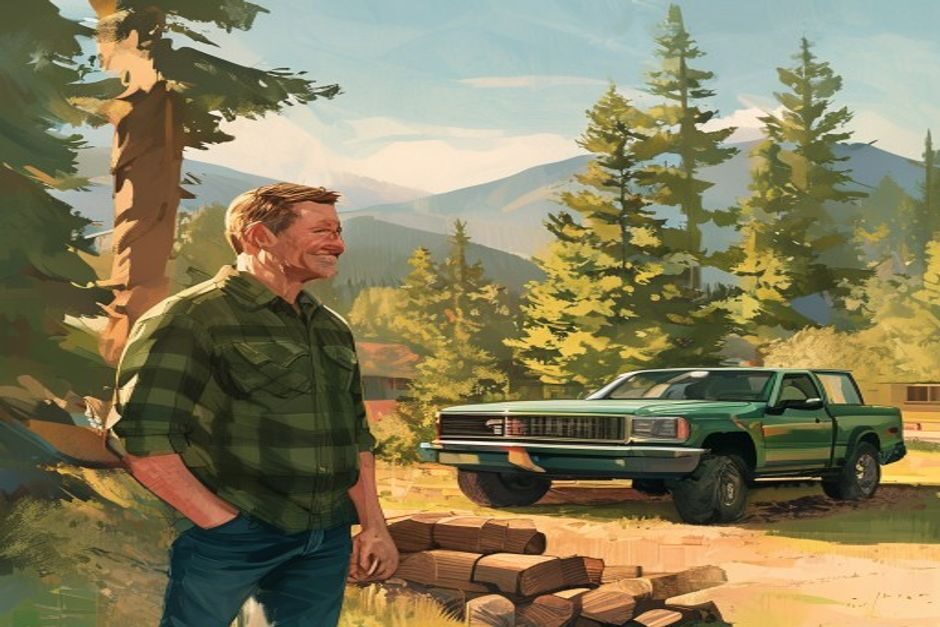
And then, one day, it's just the new normal. The firewood is split and stacked for winter. There's a young tree in the ground — something suited to the spot, that won't be the next owner's problem in forty years. The patio gets sun now. The garden you could never grow in that shade is suddenly possible.
Acceptance doesn't mean you stop missing the old tree. It means the yard is yours again, and safe, and you got to decide how it happened — instead of finding out during a windstorm at two in the morning.
Wherever you are in the stages
If you've got a tree sitting somewhere in stages one through three right now, that's alright — most people do. When you're ready to talk it through, we'll give you an honest read: what can be saved, what can't, and what it actually takes to do it safely. We handle technical and danger tree removal across the Boundary region — Grand Forks, Christina Lake, Greenwood, Rock Creek, and Osoyoos — and we'll meet you at whatever stage you're on.
No rush. The tree's been there a while. Just don't let it get to stage four on its own schedule.